Is PikPak Safe and Legit in 2026? Privacy, Torrent and Copyright Review
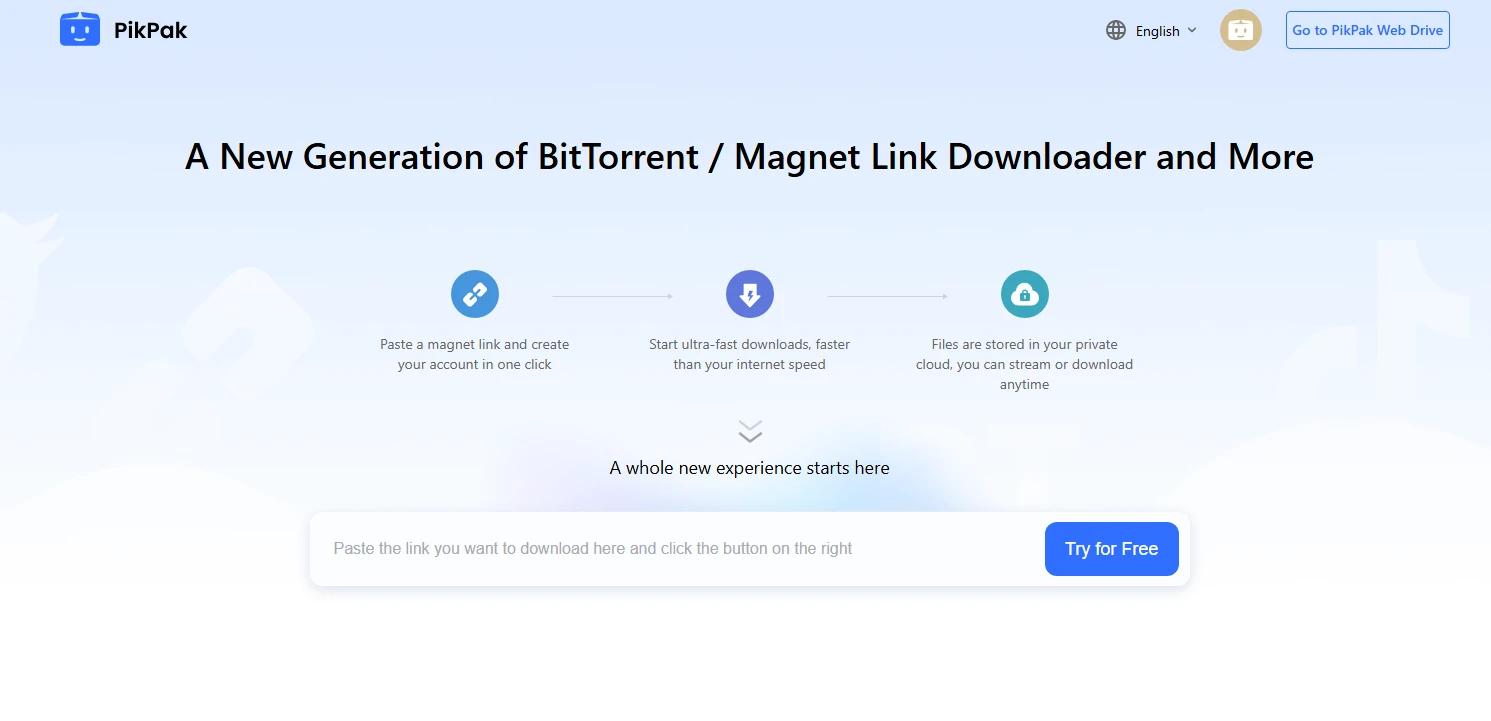
Is PikPak safe and legit? This review examines PikPak's company ownership, privacy policy, torrent risks, copyright rules, account bans and alternatives.
tags: PikPak, cloud storage, torrent downloader, privacy, copyright
Short answer: PikPak appears to be an operating commercial cloud-storage and download service rather than an obvious scam — its official site identifies PIKCLOUD PTE. LTD. as the data controller and it publishes user, privacy, copyright and transparency policies. But it is not an anonymous or zero-knowledge service. Whether using it is "safe" or lawful depends on the files you store, how you use it, your location, and the applicable copyright law.
| Question | Short answer |
|---|---|
| Is PikPak a real company? | Yes — its Privacy Policy names PIKCLOUD PTE. LTD. as the data controller. |
| Is PikPak end-to-end encrypted? | No zero-knowledge or E2E model is documented in the reviewed policy. |
| Is torrent downloading with it legal? | Depends on the content, how it's shared, and local law. |
| Can accounts be suspended? | Yes, for account sharing, copyright violations and other policy breaches. |
| Is PikPak an anonymizer? | No. It should not be treated as an anonymity or IP-hiding service. |
What is PikPak?
PikPak is a cloud storage service with a built-in cloud downloader. Instead of downloading torrents/magnets on your device, you paste a link (torrent, magnet, URL, social post) and its servers download the file into your private cloud, which you can then stream or download from.
Facts as stated by PikPak's official site and FAQ (check the live pages — details below — before quoting numbers):
- Cloud download from torrent / magnet / URL links, with online playback and multi-platform clients (Android, iOS, Windows/macOS, TV, web, browser extension)
- PikPak's Premium page advertises 10TB cloud storage, 4K original-quality playback, and WebDAV access
- PikPak advertises "20x faster" cloud downloads — a vendor marketing claim, not an independently measured result
- PikPak's FAQ states a limit of 7,000 files per torrent/BT task and describes Connected Apps (WebDAV) transfer-quota limits (a shared downstream cap of ~25% of the monthly quota, slow-down to ~100 KB/s beyond it, and a separate daily free-tier limit)
- At the time of review (Sept 2026), the Google Play listing showed a 4.8-star rating from 14,000+ ratings — store figures change over time
Who operates PikPak?
PikPak's current Privacy Policy names PIKCLOUD PTE. LTD. as the data controller, and third-party Singapore business directories list it as an active entity:
- Name / UEN: PIKCLOUD PTE. LTD., UEN
202139607W - Incorporated: 15 Nov 2021, Singapore (Exempt Private Company Limited by Shares) — per third-party directories
- Registered address (per the Privacy Policy): #08-09, Tower A, Regent Park, 22 Jalan Lempeng, Singapore 128803
- Principal activity (per directories): SSIC 62011, development of software and applications
- Directories report an annual return filed 17 Jun 2025 and estimate ~69% revenue growth in 2024; the workforce figure is an estimate, not an audited employee count
- Contact channels: the Privacy Policy lists support, privacy, copyright and security addresses — their existence shows the company publishes dedicated contact channels, but does not itself establish response quality
Sources: PikPak Privacy Policy; RecordOwl and sgpbusiness directory listings (third-party). Registered-company details can change; verify on the live sources before publication.
The Xunlei connection — unverified claims
Some Chinese-language tech discussions claim PikPak may have a relationship with Xunlei. These claims cite APK strings (references to sandai.net and xunlei_spdy), a shared registered address with a company named THUNDER CLOUD PTE. LTD., and PikPak's server-side download architecture. No official statement from either company confirms the relationship, and I could not independently verify the underlying APK sample or the original analysis.
The available evidence is insufficient to establish that Xunlei owns, operates, or controls PikPak. Users for whom possible mainland-China corporate ties would affect their privacy decision should treat this as an unresolved question, not an established fact.
Is PikPak a legitimate company?
The available evidence indicates PikPak is an operating commercial service rather than an obvious scam. Supporting signals:
- Published legal & policy pages: User Agreement, Privacy Policy, Anti-Abuse Policy, Copyright Infringement Policy, Child Sexual Abuse Policy, and a Transparency Report
- Published takedown process with a dedicated portal — a positive transparency signal, though it does not prove the service is secure or that complaints are handled consistently
- A named, registered operating entity (PIKCLOUD PTE. LTD.) and app-store presence on Google Play, the App Store, and Microsoft Store
- A substantial cross-country user base discussed on Reddit, Hacker News, Product Hunt, and forums
That does not mean PikPak offers strong privacy, guaranteed availability, or protection from account enforcement. A company can be legitimate and still suspend accounts, cooperate with takedown requests, or be imperfect in practice.## How does PikPak protect your data?
What the official Privacy Policy (effective 2026-08-18) promises:
- Staff do not routinely access files stored in private storage, and files are not read for editorial, commercial, or advertising purposes
- It states it does not sell personal data, does not use data for cross-context behavioral advertising, and does not use your content or personal data to train third-party AI models
- Automated measures: cryptographic hash-matching for CSAM (against IWF/NCMEC databases; on a match the file is blocked, the account suspended, and a report made to the relevant authority), malware signature scanning, and content-policy checks that apply mainly to publicly shared or reported files
- Law-enforcement disclosure occurs where legally required; PikPak says it publishes aggregate request stats in an annual Transparency Report and notifies users before disclosure where permitted
What the policy does not promise:
- It does not establish a zero-knowledge or end-to-end encrypted storage model (unlike services such as Tresorit or MEGA's encrypted mode). Some processing of content and metadata for legal, CSAM, malware, and security purposes is described.
- A policy description is not an independent audit of actual implementation.
Practical risk notes for users:
- Use a strong unique password and available account-security options, and bind a phone/email.
- PikPak says cloud downloads run on its remote servers using an encrypted protocol; this may prevent an ISP from directly seeing the file contents you save, but it is not complete network anonymity — metadata, connections, and traffic patterns can still be observable. PikPak should not be treated as an IP-hiding service.
- Note transfer quotas: free accounts have limits, and Connected Apps (WebDAV) share a downstream cap, with slow-down behavior beyond it (per PikPak's help-center wording).
Is downloading torrents with PikPak legal?
Using a cloud downloader is not automatically illegal in every jurisdiction, but the legal risk depends on the content, how it is shared, your location, and applicable copyright law.
- Copyrighted content (movies, shows, games, licensed music) downloaded or shared without authorization may create civil or criminal liability in some jurisdictions — whether you use a local torrent client or PikPak's cloud.
- PikPak is not an anonymizer: it runs takedown policies, cooperates with the copyright process, publishes a Transparency Report, and blocks accounts for extreme content.
- For lawful content (Linux ISOs, public-domain media, your own files, Creative Commons works), PikPak may be a practical option, but you still face ordinary privacy, malware, account-suspension, and data-backup risks.
This article is not legal advice, and it does not present a global legal rule. If the article targets a specific market (US, EU, mainland China, etc.), authoritative sources for that jurisdiction's law should be added.
Account bans and deletion — what the rules say
PikPak publishes inactivity and policy rules (per the User Agreement; effective March 1, 2026):
- 12 months without login activity (non-Premium users) → PikPak may start account deletion. You get multiple email/in-app notifications, then a 7-day grace period — logging in cancels the deletion.
- 3+ years without login AND unreachable (no valid contact info) → direct deletion may begin.
- Active Premium period → the account is not subject to deletion for inactivity under the cited rule; other quota and policy rules still apply.
- Account sharing is against the User Agreement; PikPak's help center says accounts detected sharing may be suspended for 24 hours (repeat or serious violations may carry further action).
- Free accounts have limited storage, and files in Trash still occupy space until emptied.
Suggested practice: don't share the account, monitor storage and policy notifications, and keep an independent backup of important files. These steps reduce avoidable risk but cannot guarantee an account is never restricted.
PikPak vs. alternatives (orientation table)
These are comparative orientation notes, not scored head-to-head tests:
| Dimension | PikPak | qBittorrent | Google Drive |
|---|---|---|---|
| Where downloads run | Cloud servers | Your device | Not a torrent downloader |
| Local bandwidth while fetching | Usually lower for cloud download | Uses your full connection | n/a |
| Torrent/magnet support | Yes (cloud) | Yes (local) | No native torrent support |
| Account / policy | Subject to PikPak rules | No provider account | Subject to Google rules |
| Zero-knowledge / E2E encryption | Not established in reviewed policy | Depends on local setup | Not zero-knowledge |
| Copyright response | Takedown + account rules | Depends on user | Google policies apply |
PikPak also competes with services like 115 (Cloud) and MEGA; the right choice depends on your torrent habits, privacy expectations, and budget.
Final verdict: Is PikPak safe?
Safe for ordinary cloud storage? Generally reasonable, for users who accept ordinary cloud-service, account-enforcement, and privacy risks.
Safe for anonymous torrenting? No. PikPak should not be treated as an anonymizer or IP-hiding service.
Legal to use? It depends on the files, how they are shared, and the law that applies to you.
Worth paying for? Only after testing whether its cloud-download performance and storage fit your use case. Start with the free tier and current promotions before committing to a subscription.
Affiliate links and current signup options
Affiliate disclosure: this article contains affiliate links. If you sign up or purchase through them, we may earn a commission at no additional cost to you. This does not influence the review above, which was researched independently of the affiliate partnership.
- Start free: register to get a free private-cloud account (the free-tier quota should be confirmed in PikPak's current registration or account page).
- Check current promotions: free-Premium offers, invite awards, and coupon codes change, so check PikPak's official pages for what is live now.
- Premium when you're ready: Premium advertises 10TB storage, cloud-download acceleration, 4K playback, and WebDAV. An affiliate link doesn't cost you more.
About the links (each has a different purpose):
- Search Public PikPak Resources → PikPakSo (so.pikpakss.com), an independent search index of publicly shared PikPak links (it stores no files itself). Use lawfully.
- Sign Up PikPak → PikPak's official registration with invitation code
964907. - Upgrade to Premium / Referral Program → PikPak's official Referral Program Pro landing page (invite code NWn1dDxY). Pricing and Premium features are set by PikPak; the program's rules are described on that page.
Why we recommend testing before paying: PikPak's value depends heavily on your use case. The free tier gives you enough to judge whether its cloud-download performance and storage fit before you commit to a subscription.
Published September 6, 2026 · Last reviewed September 6, 2026. This review is informational, not legal or financial advice. PikPak's policies, prices, and figures change; always consult the official PikPak User Agreement, Privacy Policy, and current product pages before making decisions.